

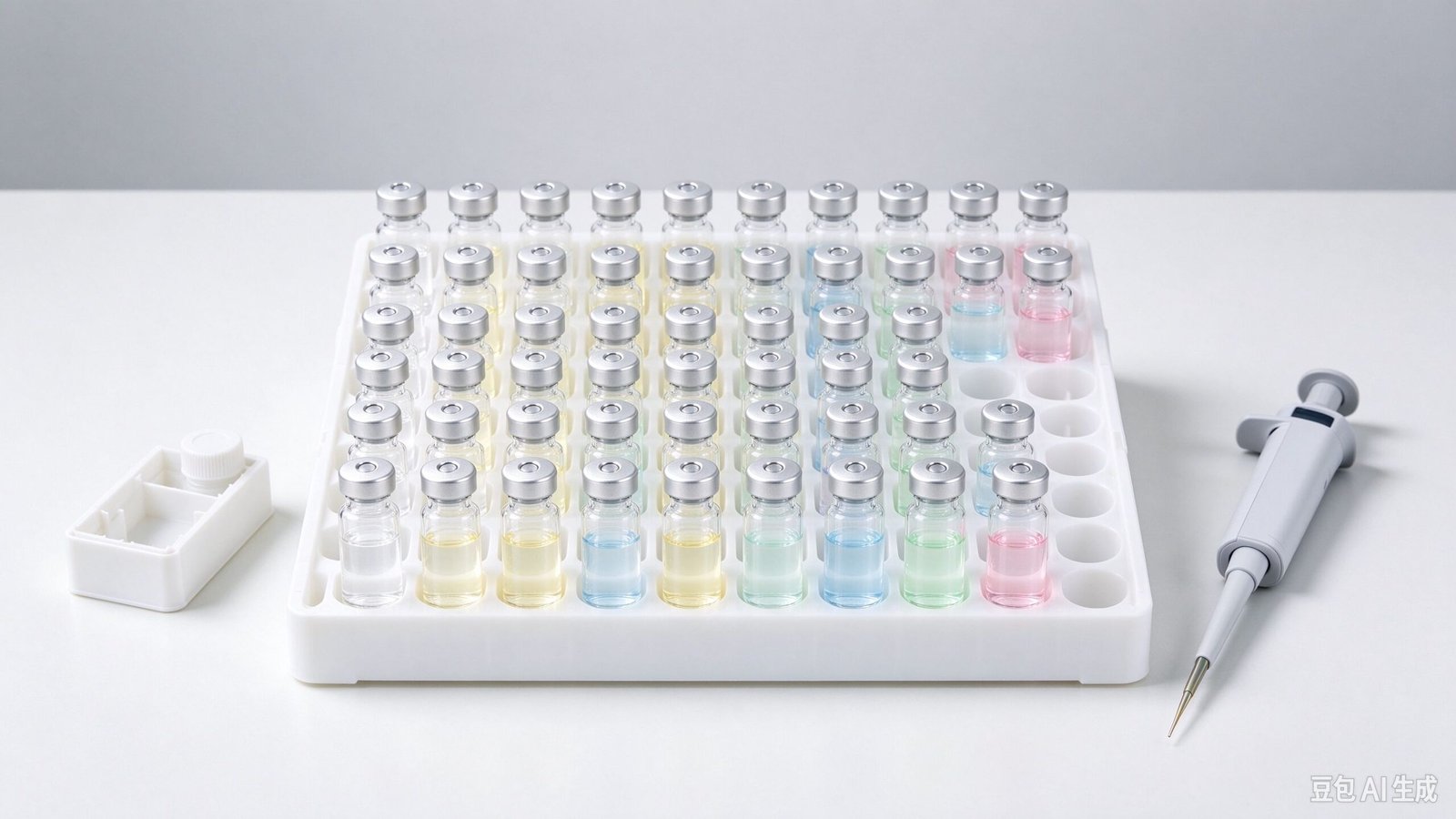
Proper packaging and labeling of research peptides are critical for maintaining product integrity and ensuring safe handling. Reputable peptides raw material manufacturers follow industry standards for packaging, labeling, and documentation. This article outlines what researchers and procurement professionals should expect.
Packaging Requirements
Primary Packaging
The immediate container holding the peptide should be:
– Inert : Glass vials are preferred (Type I borosilicate glass).
– Hermetically Sealed : Prevents moisture ingress and contamination.
– Light-Protective : Amber glass or opaque packaging for light-sensitive peptides.
– Sterile : For GMP-grade and injectable research peptides.
Secondary Packaging
– Desiccant : Included for moisture-sensitive peptides.
– Insulated Packaging : For temperature-sensitive shipments.
– Tamper-Evident Seals : Ensures product integrity.
Labeling Requirements
A properly labeled peptide vial from a peptide raw material supplier should include:
– Peptide Name : Exact sequence name or code.
– Molecular Weight : Calculated and confirmed by mass spectrometry.
– Batch/Lot Number : Unique identifier tied to the COA.
– Net Peptide Content : Amount in milligrams or grams.
– Purity : HPLC purity percentage.
– Storage Conditions : Recommended temperature and humidity.
– Expiration Date : Based on stability studies.
– “For Research Use Only” : Clear disclaimer.
– Supplier Information : Name and contact details.
Documentation Requirements
The shipment should also include:
– Certificate of Analysis (COA) : Batch-specific with full analytical data.
– Safety Data Sheet (SDS) : For safe handling and disposal.
– Certificate of Origin : For customs and supply chain transparency.
– Chain of Custody : Tracking from manufacturer to end-user.
Handling and Inspection Upon Receipt
Upon receiving a shipment from a peptide raw material supplier:
1. Inspect the packaging : Check for damage or tampering.
2. Verify the temperature : If temperature-sensitive, check for temperature monitoring data.
3. Match the documentation : Ensure the batch number on the vial matches the COA.
4. Store immediately : Place the peptide in recommended storage conditions.
5. Document receipt : Record the date, condition, and batch number.
Red Flags in Packaging and Labeling
Be cautious of suppliers who:
– Use plastic containers (not recommended for long-term storage).
– Provide inadequate temperature protection.
– Have labels that are difficult to read or lack critical information.
– Cannot provide a physical copy of the COA with the shipment.
Product Disclaimer & Terms of Use
IMPORTANT NOTICE: FOR RESEARCH USE ONLY (RUO)
This product is intended exclusively for laboratory research and scientific development purposes. It is NOT a drug, food, medical device, cosmetic, or diagnostic product.